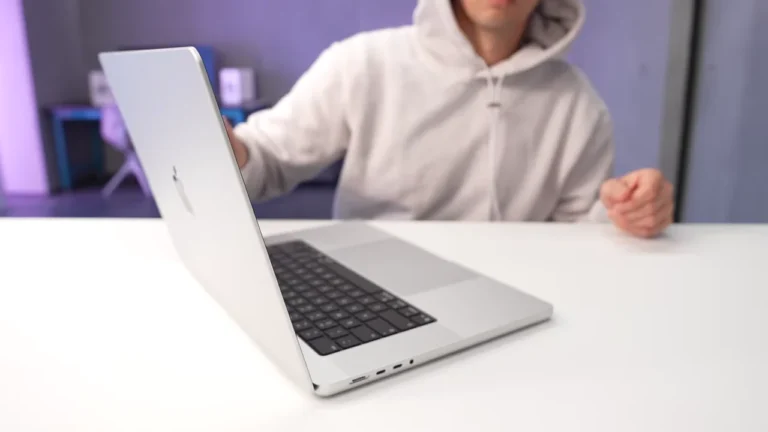
Why They Bought It & Tested It
Dave wanted to find out whether Apple could make a foldable that felt practical for ordinary buyers, not just early adopters who tolerate quirks for the novelty. The bigger question was whether Apple’s tightly controlled software and hardware choices would actually make a foldable easier to live with than Samsung’s Galaxy Z Fold line.
He also wanted to see if the iPhone Duo solved the usual foldable complaints: visible creases, fragile screens, awkward app behavior, and cameras that feel like an afterthought. In other words, does this finally behave like a normal phone that happens to bend, or just a more expensive experiment?
“Of the foldable phones I've used, this is the best one in terms of the actual experience of what the average person would want out of a phone.”
— Dave2D (Video Test)
The Real-World Test & Results
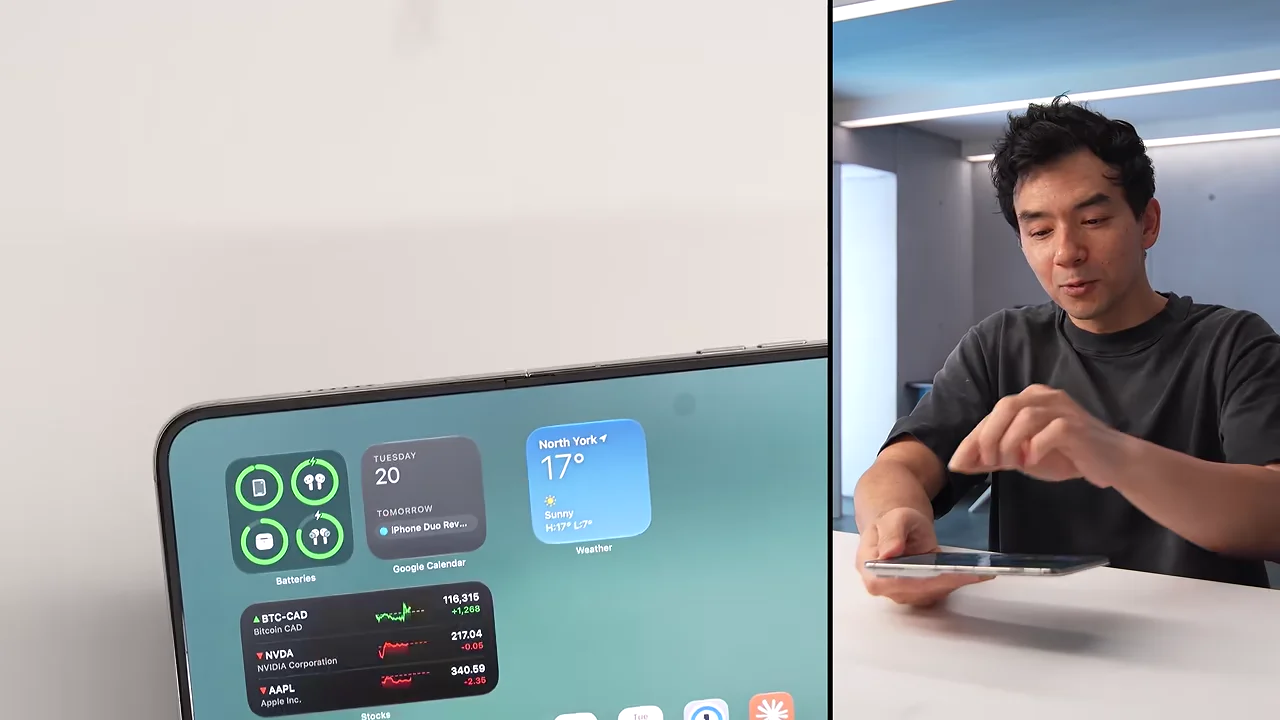
On camera, Dave started with the basics: unboxing, setup, and the first feel of the phone’s passport-like shape. He noted the dual rear camera module, the lack of Face ID, and the side-mounted Touch ID sensor, then spent time using the phone one-handed to see how Apple’s layout decisions affected daily use.
He then pushed the display and software harder. The inner matte nano-texture OLED did a good job hiding the crease, and when he rubbed wax on the screen corner, it wiped clean easily. He also tested app continuity by closing the phone mid-game in titles like Pokémon UNITE and Genshin Impact, and the transition to the outer screen stayed smooth without crashes or resets.
For cameras and performance, he compared the 48MP main and ultrawide cameras against standard iPhones and checked the inner under-display selfie camera against the outer selfie camera. He also ran a 3DMark Wild Life Extreme thermal stress test and battery drain checks to see whether the folding design introduced heat or endurance problems.

The Drawbacks To Know Before Buying
1. Right-handed design: Apple’s decision to keep the dock and toolbar controls on the right side makes the phone feel noticeably biased toward right-handed users. There’s no software option to move those controls, so left-handed buyers are stuck adapting to the layout.
2. No Face ID: The side Touch ID sensor works, but it is not as seamless as Face ID, and the five-fingerprint limit becomes a real annoyance when your grip changes between folded and unfolded use.
3. Inner camera compromise: The under-display selfie camera is the clearest example of a foldable trade-off. It is fine for convenience, but the image quality is visibly muddier and worse in lower light than the outer selfie camera.
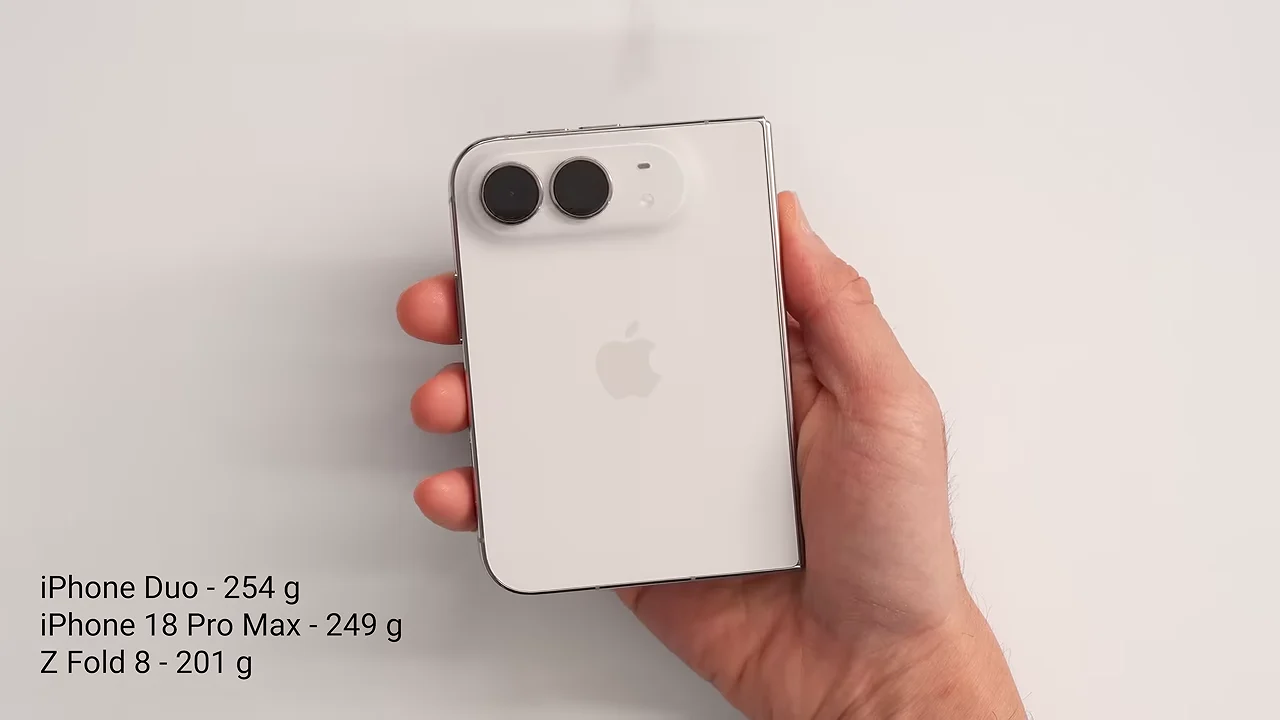
Apple iPhone Duo (256GB Star White)
Editorial Note: When you buy through links on our site, we may earn an affiliate commission at no extra cost to you.
Original Video Review by Dave2D
16:28 in-depth test, temperature checks and cleaning demonstration.